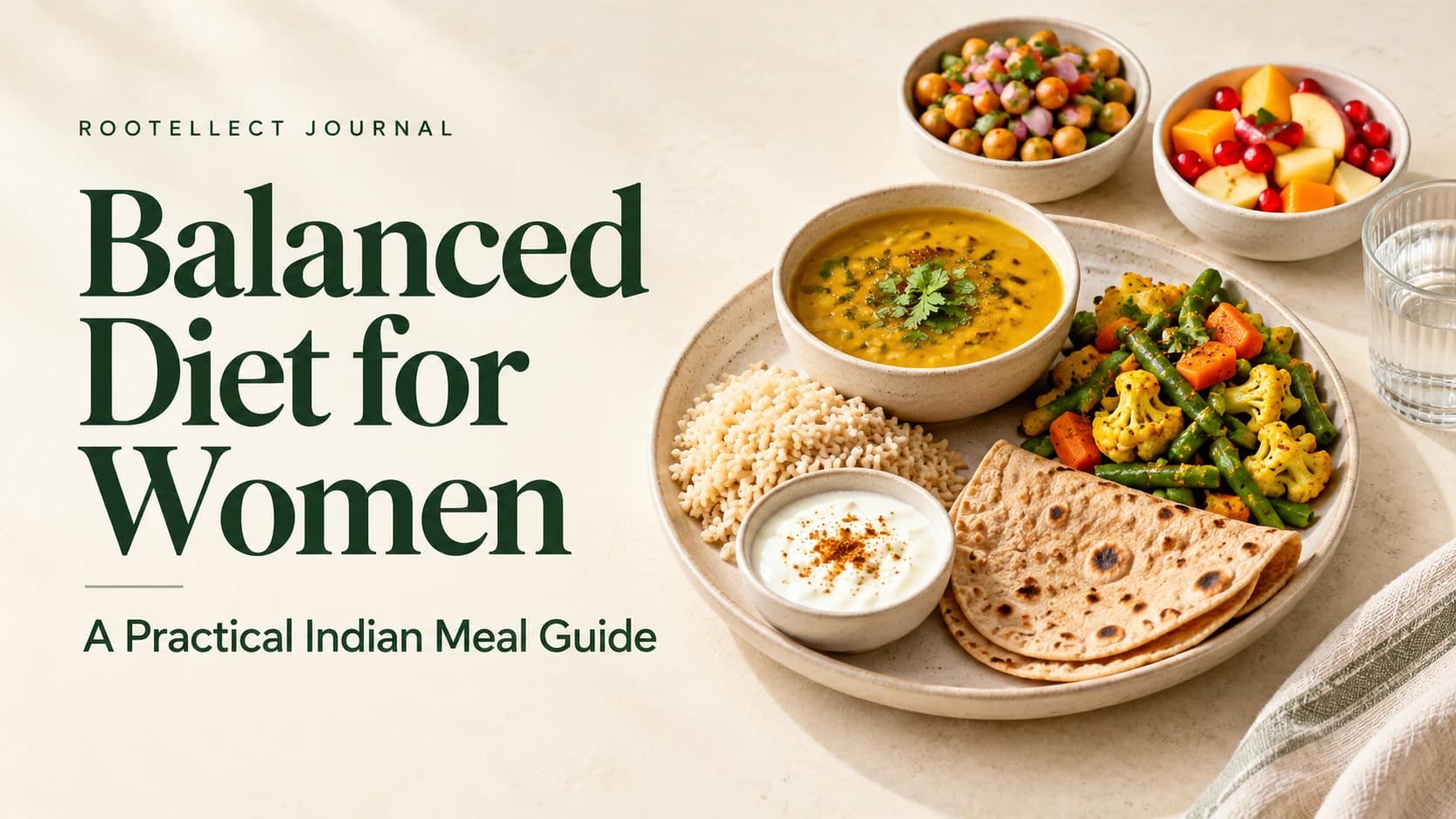
Balanced eating starts with familiar foods
A balanced diet for women combines varied foods in amounts that support everyday energy and nutrient needs. Familiar Indian foods—dal, roti, rice, vegetables, fruit, nuts and suitable protein foods—can provide the foundation without expensive superfoods or extreme restrictions.
This guide explains how to build balanced meals, adapt them for vegetarian or vegan eating, and use a sample meal chart without treating it as a personalised prescription.
Key takeaways
- —Include vegetables, grains, pulses or other protein foods, and appropriate fats across your meals.
- —Use the Indian meal chart as a flexible example, not a prescribed weight-loss plan.
- —Vegan alternatives need attention to protein, calcium and reliable vitamin B12 sources.
- —Persistent fatigue or menstrual changes need assessment—not simply another food rule.
Why balanced nutrition matters for women
Your nutritional needs change with activity, age, pregnancy, breastfeeding and health conditions. Menstruation and the menopause transition can also make conversations about iron and bone health particularly relevant.
Balanced eating supports normal body functions. It does not diagnose or treat the cause of fatigue, irregular periods or changes in mood.
If you are noticing these changes, Rootellect’s guide to women’s hormonal health explains why symptoms deserve a wider view than diet alone.
Women’s hormonal health: signs, causes and support
“The goal is a repeatable eating pattern, not a perfect plate at every meal.”
The ICMR–National Institute of Nutrition recommends eating a variety of foods in amounts appropriate for age, physiological status and physical activity. Its Dietary Guidelines for Indians encourage whole grains, pulses, millets, vegetables and suitable protein foods.
Different food groups contribute different nutrients. Combine them rather than expecting one ingredient to provide everything.
What should a balanced Indian diet include?
| Food group | Familiar choices | Practical guidance |
|---|---|---|
| Vegetables and fruit | Seasonal sabzi, leafy greens, guava, papaya, citrus fruit | Rotate your choices; choose whole fruit more often than juice |
| Grains and carbohydrates | Whole-wheat roti, oats, millets, rice | Include fibre-rich options regularly; rice need not be banned |
| Pulses and protein foods | Dal, rajma, chana, soy, tofu, dairy or suitable animal foods | Include a clear protein source in main meals |
| Nuts, seeds and fats | Peanuts, sesame, walnuts, seeds, suitable cooking oils | Use appropriate amounts rather than making meals mainly fried food |
| Calcium-containing foods | Milk, curd, calcium-set tofu, fortified plant drinks | Check labels because plant alternatives vary |
| Fluids | Safe drinking water and appropriate unsweetened drinks | Needs vary with heat, activity and medical advice |
1. Add vegetables to meals you already enjoy
Start with your usual lunch or dinner. Keep the familiar base, then add a vegetable dish or increase the vegetables already in it.
A roti meal becomes more varied with dal and sabzi. Rice can be paired with rajma and cooked vegetables.
Vegetables do not have to mean salad at every meal. Cooked greens, seasonal gourds, carrots, beans and vegetables mixed into sambar or khichdi are practical choices.
Add vegetables to poha, upma, dal or sambar. Rotate leafy greens with other seasonal produce and choose locally available options. Keep washed produce available when safe storage allows.
2. Include a recognisable protein source
Protein contributes to tissue maintenance and repair. It also provides building blocks for enzymes and other functional molecules.
For vegetarian meals, suitable options include dal, beans, chickpeas, soy, tofu, paneer, curd and milk. Nuts and seeds contribute protein too, but a small garnish should not be mistaken for a substantial protein component.
Try roti with dal, chana or tofu; rice with rajma, beans or sambar; or vegetable poha with curd or tofu.
There is no single protein amount appropriate for every woman. Body size, activity, pregnancy and conditions such as kidney disease affect individual advice.
3. Improve the combination
Carbohydrates provide energy. Whole grains, pulses, fruit and vegetables can also contribute fibre and other nutrients.
You do not need to remove every carbohydrate food to eat well. White rice can fit alongside vegetables and protein; brown rice and millets are alternatives, not compulsory replacements.
“Changing the grain alone does not make a meal nutritionally complete.”
Choose whole-wheat roti or oats when they suit your routine, try different grains for variety, and adjust portions to your appetite, activity and individual needs.
4. Include fats in appropriate amounts
Fat supports normal cell function and the absorption of fat-soluble vitamins. Nuts, seeds and suitable plant oils can contribute to a balanced pattern.
ICMR–NIN advises moderating oils and fats, limiting foods high in saturated fat, and avoiding repeated heating of cooking oil.
Measure cooking oil, add peanuts or seeds where they complement the meal, and alternate fried snacks with roasted chana, fruit or other suitable options. Avoid repeated reheating and reuse of cooking oil.
A home-cooked meal can still be high in fat, sugar or salt. Homemade is not automatically a nutritional guarantee.
5. Plan nutrient sources
A vegetarian diet and a vegan diet are not the same. Vegetarian eating can include dairy, while vegan eating excludes all animal foods.
If you replace dairy, compare the alternative’s protein, calcium and vitamin fortification. Plant drinks and plant-based curds are not automatically nutritionally equivalent to milk or dairy curd.
The NHS identifies calcium-set tofu and fortified plant drinks as useful calcium sources. It also highlights the importance of reliable vitamin B12 sources for vegan diets, including fortified foods or appropriate supplementation.
Check current labels and seek professional advice when needed. Do not assume every plant-based product provides the same nutrients.
6. Include water and food safety
Keep safe drinking water available and drink regularly. Fluid needs vary with temperature, activity, pregnancy and health conditions. Follow medical advice if you have been told to restrict fluids.
- —Wash your hands before preparing food and wash fruit and vegetables appropriately.
- —Separate raw ingredients from ready-to-eat foods.
- —Refrigerate perishable foods safely.
A one-day balanced diet chart with Indian foods
Illustrative meal pattern for an adult woman—not a calorie-controlled prescription. Adjust amounts and ingredients to your needs, preferences and allergies. Snacks are optional; this chart has not been calculated to meet an individual’s complete requirements.
| Meal | Vegetarian example | Vegan adaptation |
|---|---|---|
| Breakfast | Vegetable poha with peanuts and plain curd | Vegetable poha with peanuts and a tofu side |
| Mid-morning, if hungry | Seasonal whole fruit | Same option |
| Lunch | Roti, dal, mixed vegetable sabzi and curd | Roti, dal, mixed vegetable sabzi and calcium-set tofu |
| Afternoon, if hungry | Roasted chana and an unsweetened drink | Same option |
| Dinner | Vegetable khichdi with curd and a vegetable side | Vegetable khichdi with tofu and a vegetable side |
| Across the day | Water according to your needs | Same option |
Use regional meals you enjoy
Try idli with sambar and vegetables; rajma with rice and sabzi; chana with roti and cooked greens; or oats with an appropriate protein-rich accompaniment and fruit.
The useful principle is the combination: grains, protein foods and vegetables working together.
Fibre: at least 25 grams daily
WHO recommends at least 25 grams of naturally occurring dietary fibre per day for people older than 10 years. Whole grains, pulses, vegetables, fruit, nuts and seeds contribute.
Include these foods across meals. If you have a digestive condition or a restricted diet, ask for individual guidance.
Added salt: maximum 5 grams daily
ICMR–NIN advises restricting added salt to a maximum of 5 grams per day and using iodised salt. This is a daily amount—not an allowance for each meal. Packaged snacks, sauces and preserved foods add sodium too.
Compare sodium on similar products. Grams of salt and grams of sodium are not interchangeable.
Sugar: less than 5% of adult daily energy
ICMR–NIN recommends added sugar at less than 5% of total daily energy for adults. Start by reducing frequent sweetened drinks and heavily sweetened snacks—not by removing whole fruit.
These are population-level recommendations, not personalised targets or gram allowances.
During perimenopause, balance still matters
Balanced eating remains the foundation during the menopause transition. Protein-containing meals and attention to calcium and vitamin D are relevant to muscle and bone health, alongside appropriate movement and healthcare.
Food is not a guaranteed treatment for hot flushes, night sweats or sleep changes. Avoid turning every symptom into a long list of forbidden foods.
Rootellect’s guide to daily habits during perimenopause considers nutrition alongside sleep, strength training and symptom tracking.
Daily habits during perimenopause
Speak with a clinician about persistent fatigue, very heavy bleeding, unexplained weight changes or symptoms affecting daily life. A meal chart cannot identify whether symptoms reflect anaemia, a thyroid condition or another cause.
Common mistakes
- —Changing everything at once: improve one familiar meal before replacing your whole routine.
- —Treating rice as the problem: consider the overall meal, including vegetables, protein and amounts.
- —Replacing dairy without checking: plant products vary in protein and fortification.
- —Buying supplements instead of improving meals: supplements have specific uses but cannot replace dietary variety.
- —Trusting the front label: natural or multigrain does not automatically mean nutritionally better.
Balanced eating can be affordable
Seasonal vegetables, dal, chana, peanuts and locally available grains can form useful meals. You do not need a cupboard full of specialised health foods.
Plan a few combinations you enjoy. Prepare suitable components ahead of time and store them safely, so busy evenings do not depend entirely on packaged convenience foods.
Rotate vegetables and pulses for variety. Start with foods you already buy before introducing unfamiliar ingredients.
Start with one useful change
A familiar meal often needs an addition rather than a complete replacement. Put dal next to rice, add vegetables to lunch, or plan a reliable calcium source when switching away from dairy.
“Small changes you can repeat are more useful than an extreme plan you cannot maintain.”
This article provides general nutrition education, not individual medical advice. Consult a qualified dietitian or healthcare professional for advice suited to pregnancy, breastfeeding, medicines, allergies or health conditions.
References
ICMR–NIN — Dietary Guidelines for Indians, 2024
Frequently Asked Questions
What should a woman eat every day?
Include varied vegetables and whole fruit, grains or other nutritious carbohydrate foods, pulses or another protein source, suitable fats and adequate fluids. Amounts depend on activity, health conditions and life stage.
Can ordinary Indian food provide balanced nutrition?
Yes. Dal, roti, rice, vegetables, chana, rajma, fruit and suitable dairy or plant alternatives can form balanced meals. Combine food groups rather than expecting one staple to provide everything.
Is rice allowed in a balanced diet?
Yes. Rice can fit when combined with vegetables and protein foods. Adjust portions to your needs rather than banning it automatically.
Can a vegan diet be balanced?
Yes, with appropriate planning. Pay particular attention to nutrients such as calcium and vitamin B12, using suitable fortified foods or supplements where needed.
Does balanced eating cure hormonal imbalance?
No. It supports general nutrition but does not diagnose or cure a hormonal condition. Persistent or disruptive symptoms need medical assessment.
Should every woman take a supplement?
No. Supplement needs depend on diet, life stage, deficiencies, medicines and health history. A qualified healthcare professional can help identify an appropriate nutrient and amount.
Can I use this chart during pregnancy or with diabetes?
Do not treat this illustrative chart as a personalised plan for pregnancy, diabetes or another health condition. Ask a qualified dietitian or clinician to adapt it.