There are days when everything feels off.
You wake up tired even after a full night of sleep. Your mood shifts without warning. Small things irritate you more than they should. Your body feels heavy, your mind feels foggy, and somewhere deep inside, you feel disconnected from yourself.
You try to push through. You tell yourself it is just stress, just a bad day, just part of life.
But when this becomes your normal, your body may be trying to tell you something deeper.
This is often what hormonal imbalance in women feels like—not dramatic, not always obvious, but quietly disruptive. It affects how you feel, think, function, and even how you relate to yourself.
This article is not here to diagnose you or sell you quick fixes. It is here to help you understand what might be happening inside your body—so you can begin to respond with awareness instead of confusion.
What Is Hormonal Imbalance in Women?
Hormones are chemical messengers that regulate nearly every function in your body—from your menstrual cycle and metabolism to your mood, sleep, and energy levels.
When these hormones are in balance, your body tends to feel stable and predictable. But when even one hormone shifts out of its optimal range, it can create a ripple effect.
Hormonal imbalance in women does not always mean something is severely wrong. Sometimes, it is your body adapting to stress, lifestyle changes, or life stages like puberty, pregnancy, or perimenopause.
But when the imbalance persists, it can start showing up in ways that feel confusing, frustrating, and deeply personal.
The Signs You Might Be Experiencing Hormonal Imbalance
Feeling Constantly Tired
One of the most common yet overlooked signs is persistent fatigue.
You might find yourself asking, "Why am I always tired?" even when your routine has not changed much.
This can be linked to imbalances in cortisol (your stress hormone), thyroid hormones, or even insulin. When these systems are disrupted, your body struggles to produce and sustain energy efficiently.
Suspect cortisol may be part of the fatigue picture?
High cortisol symptoms in women explained →Mood Swings and Emotional Sensitivity
If your emotions feel unpredictable—calm one moment and overwhelmed the next—it may not just be "in your head."
Fluctuations in estrogen and progesterone can directly affect neurotransmitters like serotonin and dopamine, which regulate mood.
This is why hormonal imbalance can lead to:
- —Sudden irritability
- —Anxiety or restlessness
- —Low mood or emotional numbness
These are not personality flaws. They are physiological responses.
Irregular Periods or Cycle Changes
Your menstrual cycle is one of the clearest indicators of hormonal health.
If your periods have become irregular, too frequent, too light, or too heavy, your body may be struggling to maintain hormonal rhythm.
Conditions like PCOS (Polycystic Ovary Syndrome) and PCOD (Polycystic Ovarian Disease) are common contributors to such disruptions.
Feeling Disconnected From Yourself
This is harder to explain, but many women describe it the same way: "I don't feel like myself anymore."
Hormonal imbalance can affect cognition, emotional regulation, and even your sense of identity. Brain fog, lack of motivation, and reduced mental clarity can make you feel distant from your own life.
Sleep Disturbances
Sleep and hormones are deeply connected.
Low progesterone, high cortisol, or fluctuating estrogen levels can interfere with your sleep cycle, making it harder to fall asleep or stay asleep.
And poor sleep further worsens hormonal imbalance—creating a cycle that is difficult to break.
Understanding the Root Causes
Hormonal imbalance rarely has a single cause. It is usually a combination of internal and external factors working together over time.
PCOS and PCOD
PCOS symptoms often include irregular periods, acne, weight fluctuations, and excess hair growth. But beyond physical symptoms, many women with PCOS also experience fatigue, mood swings, and insulin resistance.
PCOD causes are often linked to lifestyle, genetics, and metabolic health. When the body becomes resistant to insulin, it can trigger increased androgen (male hormone) production, disrupting the menstrual cycle.
Chronic Stress and Hormonal Disruption
Modern life has normalized stress to a point where many women do not even recognize its impact anymore.
When your body is under constant stress, it produces higher levels of cortisol. Over time, this can suppress reproductive hormones, disrupt ovulation, and lead to symptoms like fatigue, anxiety, and irregular cycles.
Stress and hormones are deeply interconnected. Your body prioritizes survival over balance.
Perimenopause
Perimenopause symptoms can begin as early as your late 30s or early 40s.
During this phase, estrogen levels fluctuate unpredictably, leading to:
- —Mood swings
- —Sleep disturbances
- —Irregular periods
- —Low energy
This is a natural transition, but the intensity of symptoms varies depending on overall hormonal health.
Nutrient Deficiencies
Your body needs specific nutrients to produce and regulate hormones effectively.
Deficiencies in iron, vitamin D, magnesium, and B vitamins can contribute to fatigue, mood changes, and hormonal irregularities.
Unfortunately, modern diets often lack these essential nutrients, especially in women who are managing busy lifestyles.
Poor Sleep and Lifestyle Patterns
Sleep and hormonal health are closely linked.
Late nights, screen exposure, irregular routines, and lack of rest can disrupt your circadian rhythm, which directly affects hormone production.
Over time, this imbalance compounds, affecting everything from your energy to your menstrual cycle.
Real Stories, Real Experiences
Aditi, 24
Aditi started experiencing irregular periods during college. Initially, she ignored it, assuming it was due to stress.
But over time, she began feeling constantly tired and emotionally overwhelmed.
After consulting a doctor, she was diagnosed with PCOS. What surprised her most was not the diagnosis—it was realizing how long her body had been signaling distress.
Meera, 34
Meera balanced a demanding job and family responsibilities.
She was not expecting to feel so exhausted all the time.
Her sleep became inconsistent, her mood unpredictable, and she started feeling disconnected from things she once enjoyed.
Her condition was not a single diagnosis—it was chronic stress affecting her hormonal balance.
Ritu, 42
Ritu began noticing changes in her cycle and sleep patterns.
At first, she dismissed it as aging.
But when her mood swings and fatigue intensified, she learned she was entering perimenopause.
Understanding this phase helped her approach her health with more awareness and less fear.
Why You Feel This Way (The Science Behind It)
Hormones do not work in isolation.
Estrogen, progesterone, cortisol, insulin, and thyroid hormones are part of a complex network.
When one hormone is out of balance, it affects others.
For example:
- —High cortisol can suppress progesterone
- —Insulin resistance can increase androgen levels
- —Low estrogen can affect serotonin production
This interconnected system is why symptoms often overlap and feel difficult to pinpoint.
Your body is not malfunctioning—it is adapting to internal imbalances.
Supporting Your Body Naturally
There is no one-size-fits-all solution to hormonal imbalance. But there are ways to support your body gently and consistently.
Nutrition That Supports Hormones
Eating balanced meals with adequate protein, healthy fats, and fiber can help stabilize blood sugar and support hormone production.
Including micronutrient-rich foods can address underlying deficiencies that may be contributing to fatigue and mood changes.
Stress Regulation
Instead of trying to eliminate stress entirely, focus on how your body processes it.
Practices like mindful breathing, journaling, and gentle movement can help regulate your nervous system.
Even small shifts can reduce the hormonal impact of stress over time.
Prioritizing Sleep
Improving sleep quality can significantly impact hormonal health.
Creating a consistent sleep routine, limiting screen exposure before bed, and ensuring a calm environment can help restore your natural rhythm.
Movement That Feels Supportive
Not all exercise needs to be intense.
For women experiencing hormonal imbalance, excessive high-intensity workouts can sometimes increase stress levels.
Gentle, consistent movement like walking, yoga, or strength training can be more supportive.
A Gentle Approach to Support
Certain botanicals have traditionally been used to support women through different hormonal phases.
Herbs like Shatavari and Ashwagandha are known for their adaptogenic properties, helping the body respond to stress while supporting hormonal equilibrium.
In today's fast-paced lifestyle, many women also explore structured nutritional support alongside dietary and lifestyle changes.
Formulations designed specifically for women's hormonal health can provide targeted nutrients and herbal support—especially for concerns related to PCOS, cycle irregularities, or energy levels.
Some women choose to incorporate blends that focus on overall hormonal balance, stress management, and reproductive health as part of a broader wellness routine.
The key is to approach this support thoughtfully—seeing it as a complement, not a replacement, for understanding your body.
You Are Not Overreacting—Your Body Is Communicating
One of the most important things to understand is this: your symptoms are not random.
They are your body's way of asking for attention, care, and balance.
Feeling tired all the time, experiencing mood swings, or struggling with irregular cycles does not make you weak or dramatic.
It makes you human.
When Should You Seek Help?
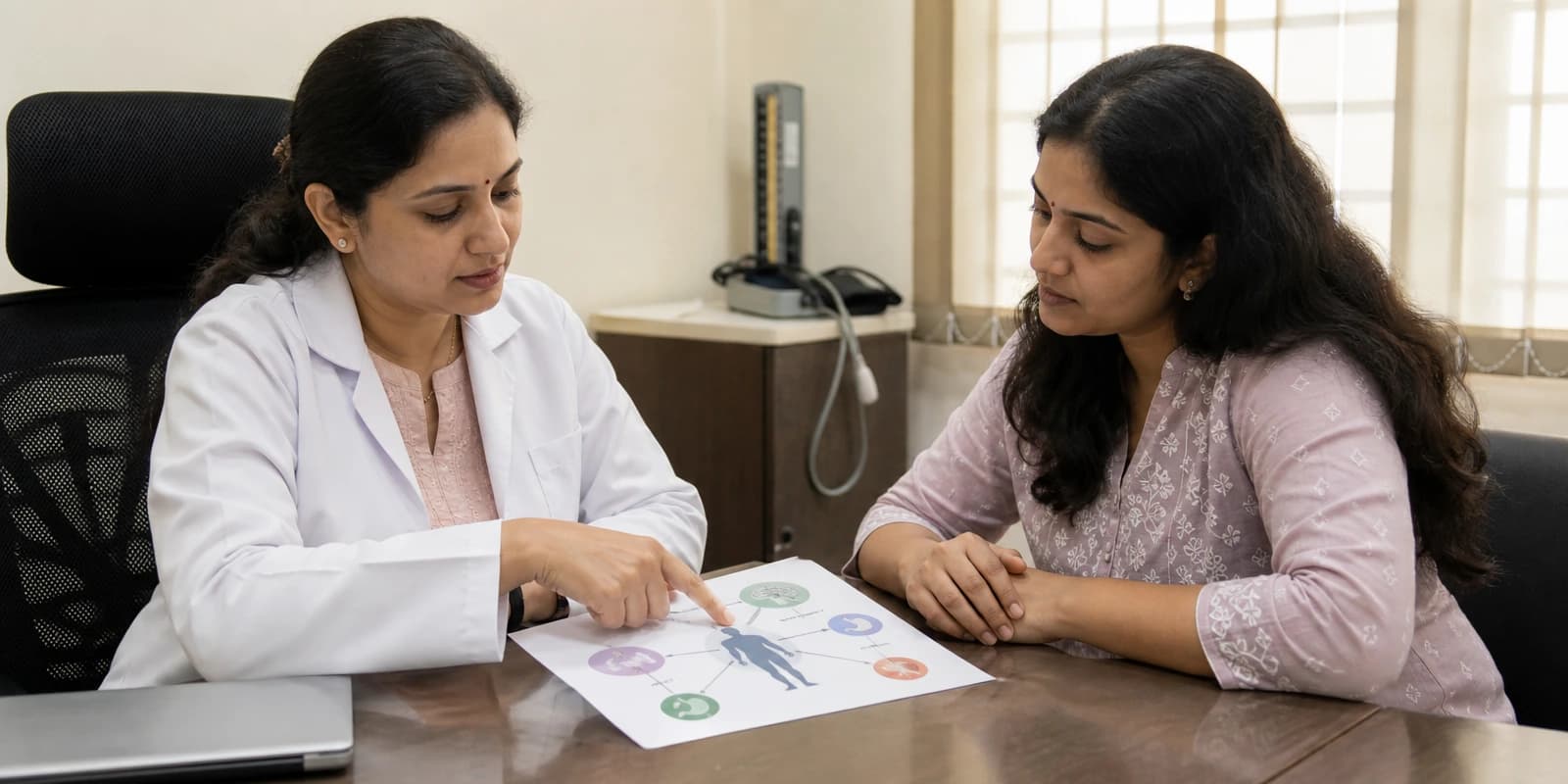
If your symptoms persist or begin to affect your daily life, it is important to consult a qualified healthcare professional.
Hormonal health is complex, and personalized guidance can help identify underlying causes and appropriate interventions.
Final Thoughts
Hormonal imbalance in women is not just about physical symptoms—it is about how you feel in your body every day.
It is about energy, clarity, emotional stability, and connection to yourself.
Understanding what is happening inside your body is the first step toward change.
And that change does not need to be overwhelming.
It can start with awareness. With small, consistent shifts. With choosing to listen to your body instead of ignoring it.
Because balance is not something you force. It is something you support.
Disclaimer
This article is intended for informational and educational purposes only and should not be considered medical advice. Individual health conditions vary, and it is recommended to consult a qualified healthcare professional before making any changes to your diet, lifestyle, or supplementation. Any products or ingredients mentioned are not intended to diagnose, treat, cure, or prevent any disease. Please refer to FSSAI guidelines and consult a certified practitioner for personalized recommendations.