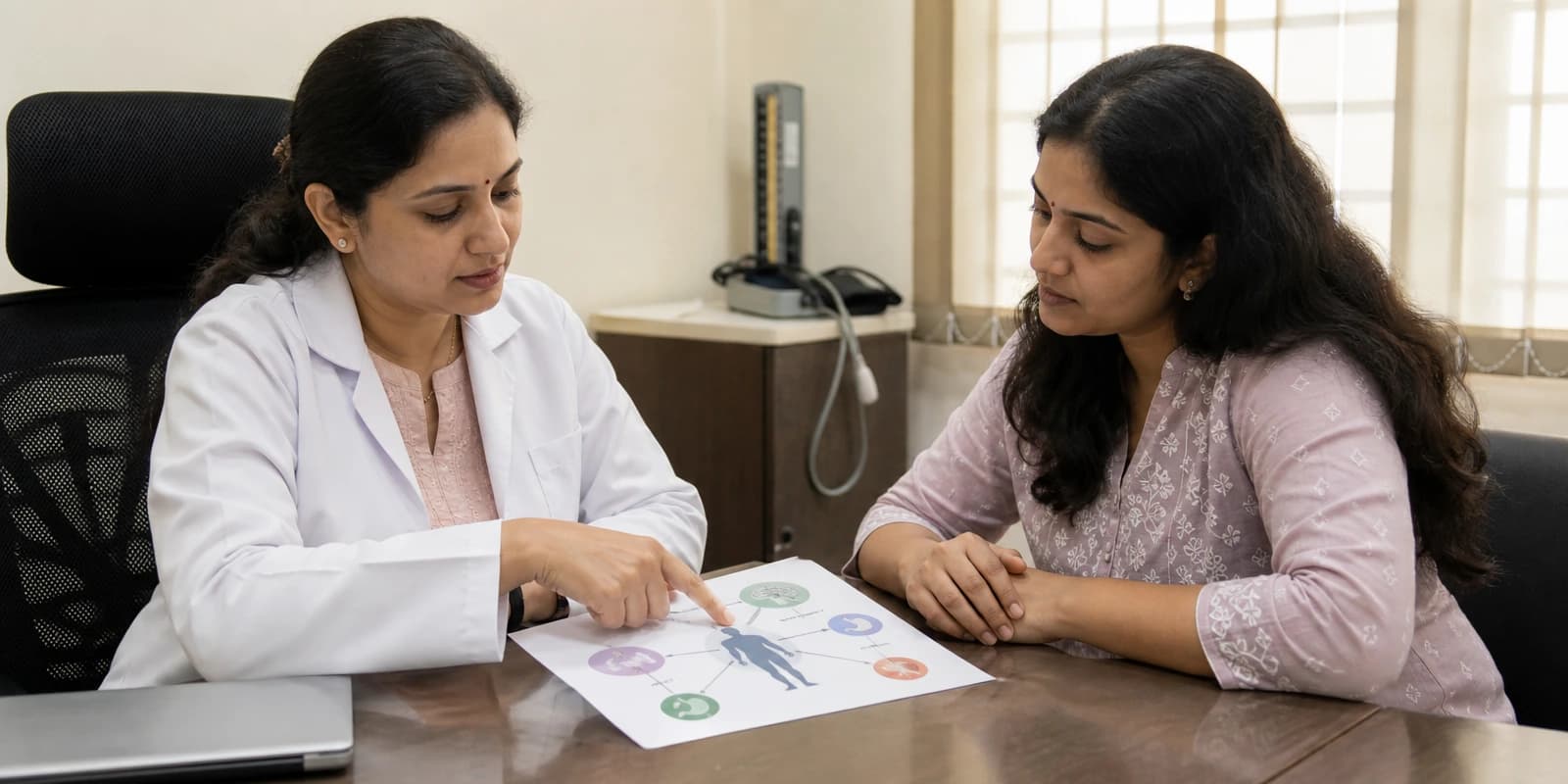
For decades, millions of women around the world were diagnosed with PCOS — Polycystic Ovary Syndrome — after experiencing symptoms like irregular periods, weight gain, acne, infertility, fatigue, hair thinning, or excessive facial hair growth.
Yet despite how common the diagnosis became, many women still felt misunderstood.
Why?
Because the term “PCOS” often failed to explain the full picture of what was happening inside the body.
The name itself placed emphasis on ovarian cysts, even though many women with PCOS do not actually have cysts, while others experience symptoms that extend far beyond reproductive health. Over time, researchers, endocrinologists, and wellness experts began recognizing that the condition involves a much deeper network of hormonal, metabolic, inflammatory, and neuroendocrine dysfunctions.
This growing understanding is why conversations around PMOS — Polyendocrine Metabolic Ovarian Syndrome — are gaining attention in modern women’s health discussions.
The term PMOS reflects a more comprehensive perspective: one that recognizes PCOS as a whole-body metabolic and endocrine condition rather than simply an ovarian disorder.
At ROOTELLECT, we believe women deserve access to educational, science-informed wellness conversations that help them better understand their bodies — not just manage symptoms temporarily.
§ 08Why the Traditional Understanding of PCOS Was Incomplete
Historically, PCOS was largely diagnosed through reproductive symptoms and ultrasound findings.
Doctors often evaluated
- — Irregular or absent periods
- — Ovarian cysts
- — Fertility concerns
- — Elevated androgen levels
- — Weight gain
While these symptoms are important, they only represent part of the condition.
In recent years, growing scientific evidence has shown that PCOS is strongly connected to
- — Insulin resistance
- — Chronic inflammation
- — Metabolic dysfunction
- — Cortisol dysregulation
- — Nervous system imbalance
- — Cardiovascular risk factors
- — Liver health dysfunction
- — Blood sugar instability
Several clinical studies have demonstrated that insulin resistance is present in a significant percentage of women diagnosed with PCOS, regardless of body weight. Researchers now understand that metabolic dysfunction often plays a central role in hormonal imbalance and symptom progression.
This means PCOS is not simply a reproductive issue.
It is deeply connected to the body’s endocrine and metabolic systems.
That is precisely why the PMOS conversation matters.
§ 19What Does PMOS Mean?
PMOS stands for Polyendocrine Metabolic Ovarian Syndrome.
Each part of the term reflects a broader scientific understanding of the condition
§ 22Polyendocrine
This refers to the involvement of multiple hormonal systems throughout the body — not just reproductive hormones.
Hormones impacted may include
- — Insulin
- — Cortisol
- — Estrogen
- — Progesterone
- — Testosterone
- — Luteinizing hormone (LH)
- — Follicle-stimulating hormone (FSH)
Because hormones communicate with one another continuously, imbalance in one system can disrupt several others simultaneously.
§ 27Metabolic
The word “metabolic” highlights the role of metabolism in hormonal wellness.
Research increasingly shows that many women with PCOS experience
- — Reduced insulin sensitivity
- — Blood sugar fluctuations
Increased inflammation
- — Difficulty converting food into energy efficiently
- — Elevated risk for metabolic syndrome
This explains why many women report symptoms such as
- — Fatigue after meals
- — Sugar cravings
- — Persistent weight gain
- — Brain fog
- — Low energy levels
- — Difficulty losing weight despite lifestyle changes
The metabolic aspect of the condition is often one of the most overlooked — yet scientifically significant — components.
§ 36Ovarian Syndrome
The ovarian component still matters because ovulation irregularities and reproductive symptoms remain central features for many women.
However, the PMOS framework acknowledges that ovarian symptoms are often the result of broader systemic dysfunctions happening throughout the body.
§ 39The Science Behind Insulin Resistance and Hormonal Imbalance
One of the most important scientific developments in women’s hormonal health is the understanding of insulin resistance.
Insulin is a hormone produced by the pancreas that helps regulate blood sugar levels.
When cells stop responding efficiently to insulin
- — The body produces more insulin
- — Blood sugar regulation becomes impaired
- — Hormonal pathways become disrupted
Research suggests that elevated insulin levels can stimulate the ovaries to produce excess androgens, including testosterone.
This can contribute to symptoms such as
- — Acne
- — Facial hair growth
- — Scalp hair thinning
- — Irregular cycles
- — Ovulation dysfunction
In addition, insulin resistance is associated with chronic low-grade inflammation, which may further worsen hormonal imbalance and metabolic stress.
This is one reason many experts now argue that the name “PCOS” fails to fully represent the condition’s metabolic complexity.
§ 49The Four Major Systems Affected in PMOS
Modern research suggests that PMOS impacts multiple interconnected systems throughout the body.
§ 511. The Insulin & Metabolic System
The metabolic system is responsible for
- — Energy production
- — Blood sugar regulation
- — Fat storage
- — Hormonal signaling
When insulin resistance develops, women may experience
- — Weight fluctuations
- — Increased abdominal fat
- — Intense cravings
- — Fatigue
- — Difficulty sustaining energy levels
Scientific literature increasingly supports the idea that insulin dysfunction is one of the primary drivers of hormonal imbalance in many women diagnosed with PCOS.
§ 572. The Androgen System
Elevated androgen levels are one of the hallmark features associated with PCOS.
Excess androgen activity may contribute to
- — Acne
- — Hirsutism (excess hair growth)
- — Hair thinning
- — Oily skin
- — Mood changes
However, androgens themselves are often influenced by insulin, inflammation, and stress-related pathways — reinforcing the idea that the condition is systemic rather than isolated.
§ 623. The Neuroendocrine System
The nervous system and endocrine system are deeply interconnected.
Chronic stress can disrupt
- — Cortisol rhythms
- — Sleep quality
- — Hormonal communication
- — Appetite regulation
- — Inflammatory pathways
Women experiencing hormonal imbalance frequently report
- — Anxiety
- — Mood instability
- — Burnout
- — Poor sleep
- — Emotional exhaustion
Emerging research suggests stress regulation may play an important role in improving overall hormonal wellness.
§ 694. The Inflammatory & Cardiometabolic System
Studies have shown that many women with PCOS also exhibit markers of chronic inflammation.
Over time, this may increase the risk of
- — Cardiovascular disease
- — Type 2 diabetes
- — Cholesterol imbalance
- — Fatty liver disease
- — Long-term metabolic dysfunction
This is why modern wellness approaches increasingly emphasize preventive care and long-term metabolic support rather than short-term symptom suppression alone.
§ 74Why the PMOS Conversation Is Resonating With Women Worldwide
Women today are becoming more educated about their health than ever before.
They are asking deeper questions
- — Why am I exhausted all the time?
- — Why is my metabolism struggling?
- — Why do stress and hormones feel interconnected?
- — Why do symptoms persist despite treatment?
- — Why does hormonal imbalance affect my mood, sleep, and energy?
The PMOS framework resonates because it validates what many women have experienced for years:
Hormonal health is not isolated.
It is interconnected.
The body functions as an integrated system where metabolism, hormones, stress, inflammation, nutrition, sleep, and emotional health constantly influence one another.
§ 82The Future of Women’s Wellness Is Root-Cause Focused
The growing conversation around PMOS reflects a major shift happening in healthcare and wellness.
Women are moving away from
- — Symptom-only solutions
- — Temporary fixes
- — Generic wellness advice
Instead, they are seeking
- — Root-cause understanding
- — Hormonal education
- — Whole-body wellness
- — Sustainable metabolic support
- — Personalized wellness approaches
This evolution represents a more informed and compassionate future for women’s health.
Looking for plant-based support aligned with a whole-body approach to PCOS?
Read our 2026 guide to natural PCOS & PCOD support →§ 90ROOTELLECT’s Approach to Hormonal & Metabolic Wellness
At ROOTELLECT, we believe women deserve wellness support that recognizes the complexity of the female body.
Hormonal wellness is not just about reproductive health.
It is about supporting interconnected systems including
- — Metabolic balance
- — Stress response
- — Inflammatory pathways
- — Nutritional support
- — Hormonal harmony
- — Whole-body wellness
Our philosophy is built around
- — Plant-based wellness support
- — Multi-pathway balance
- — Science-informed education
- — Sustainable lifestyle wellness
- — Non-hormonal support approaches
Because true wellness starts when women understand the deeper connections happening within their bodies.
Explore Rootellect Balance — plant-based, multi-pathway support for hormonal and metabolic wellness.
Shop PCOS & PCOD Support§ 99Final Thoughts
Whether the future continues using the term PCOS or evolves toward PMOS, one thing is becoming increasingly clear through research and education:
Women’s hormonal health cannot be reduced to ovarian cysts alone.
It involves a sophisticated interaction between hormones, metabolism, insulin sensitivity, stress regulation, inflammation, and overall endocrine function.
The PMOS conversation represents more than a new term.
It represents a new understanding.
A shift toward recognizing women’s health as whole-body health.
And as scientific awareness continues to evolve, so does the opportunity for women to receive the deeper education, support, and wellness-centered care they have deserved for far too long.
§ 107FAQ Section
What is PMOS?
PMOS stands for Polyendocrine Metabolic Ovarian Syndrome, an emerging term that highlights the metabolic and endocrine complexity associated with PCOS.
Is PMOS scientifically recognized?
PCOS remains the official medical diagnosis. However, PMOS is increasingly discussed in wellness and educational conversations to better reflect the condition’s whole-body impact.
Why do experts believe PCOS is metabolic?
Research shows that insulin resistance, inflammation, and metabolic dysfunction are common in women diagnosed with PCOS, suggesting the condition extends beyond reproductive health.
Can insulin resistance worsen hormonal imbalance?
Yes. Elevated insulin levels may increase androgen production and disrupt ovulation, contributing to symptoms like acne, weight gain, and irregular periods.
Is stress connected to PCOS symptoms?
Chronic stress may affect cortisol levels, inflammation, sleep quality, and hormonal communication, all of which can influence symptom severity.
What makes ROOTELLECT different?
ROOTELLECT focuses on whole-body hormonal and metabolic wellness through plant-based, multi-pathway support and educational wellness awareness.
§ 120ROOTELLECT
§ 121Discover a Smarter Approach to Hormonal Wellness
ROOTELLECT is committed to helping women better understand the connection between hormones, metabolism, and whole-body wellness through science-informed, plant-based support.
Because women deserve more than symptom management — they deserve understanding.
§ 124Disclaimer & Regulatory Information
The information shared in this article is intended for educational and awareness purposes only and should not be considered medical advice, diagnosis, treatment, or a substitute for professional healthcare consultation.
The term “PMOS” (Polyendocrine Metabolic Ovarian Syndrome) is an emerging educational and wellness-focused concept used to discuss the broader metabolic and endocrine aspects commonly associated with PCOS. PCOS (Polycystic Ovary Syndrome) remains the medically recognized clinical diagnosis.
ROOTELLECT products are designed to support general wellness and are not intended to diagnose, treat, cure, or prevent any disease or medical condition. Individual results may vary depending on lifestyle, health status, nutrition, and other personal factors.
Consumers are advised to consult a qualified healthcare professional before making changes to their diet, supplementation, wellness routine, or treatment plan, especially if pregnant, nursing, taking medication, or managing a medical condition.
All ROOTELLECT formulations and communications are developed in accordance with applicable regulatory and labeling guidelines, including FSSAI compliance standards for nutraceutical and wellness products in India.
This content is not intended to replace medical supervision or prescribed therapies.