
She replies to every email on time. She never misses a deadline. Her home looks put together, her calendar is colour coded, and everyone around her calls her "the strong one." And yet, most nights, her mind won't stop replaying conversations, worrying about things that haven't happened yet, and quietly asking, "Did I do enough today?"
If this feels familiar, you are far from alone. Millions of women live with a version of anxiety that hides behind achievement, organisation and a smile that says "I'm okay," even when the inside feels anything but calm. This is often called high functioning anxiety, and it is one of the most misunderstood forms of anxiety simply because it looks so much like success.
This guide takes a deep look at what anxiety actually is inside the body and brain, why high functioning anxiety shows up so often in women specifically, what the research says about the hormonal and social factors involved, and what small, realistic, everyday choices can help support a calmer nervous system over time.
What Anxiety Actually Is, Beyond the Word Itself
Anxiety gets used so casually in everyday conversation that its real meaning often gets lost. It is not simply "being stressed" or "thinking too much." Anxiety is, at its core, a survival response built into every human brain. It exists to protect you.
Deep in the brain sits a small structure called the amygdala, often described as the brain's alarm system. When it senses a threat, real or imagined, it sends an emergency signal that triggers the release of stress hormones like cortisol and adrenaline. Your heart rate rises, your breathing becomes shallow, your muscles tense, and your body prepares to either fight the threat, run from it, or freeze completely. This entire chain of events is called the stress response, and it has kept humans alive for thousands of years.
The problem is that this system was designed for short bursts of real physical danger, not for a WhatsApp message left on read, an unfinished to-do list, or a performance review scheduled for tomorrow. In modern life, this ancient alarm system often gets triggered dozens of times a day by situations that are stressful but not actually dangerous. Over time, if the alarm keeps going off without enough recovery time in between, the nervous system can get stuck in a low-grade state of alert. This is what many people experience as chronic anxiety: a mind that is constantly scanning, predicting and preparing, even during ordinary, safe moments.
Common signs of a nervous system stuck on alert
- —A racing or overactive mind
- —Restlessness paired with exhaustion ("wired but tired")
- —Trouble falling or staying asleep
- —Tight shoulders or a clenched jaw
- —A constant undercurrent of worry even on good days
- —Irritability and fatigue that never fully lifts
For a lot of people, these symptoms are visible enough that friends, family or colleagues notice something feels off. But for a large number of women, anxiety does not look like this at all. It looks, quite convincingly, like being highly capable.
What Is High Functioning Anxiety, Really?
High functioning anxiety is not a formal medical diagnosis you will find in a clinical manual. It is, however, an incredibly common and well-recognised pattern: experiencing all the internal symptoms of anxiety while continuing to perform at a very high level on the outside.
A woman living with high functioning anxiety often meets every deadline, sometimes finishing tasks well ahead of time just to feel a sense of control. She appears calm, capable and dependable to everyone around her. She is often described by others as organised, driven or "someone who has it all figured out." She rarely says no, even when her plate is already full. Underneath all of this sits a quiet, constant hum of worry that rarely fully switches off. She over-prepares for meetings that do not need over-preparing. She replays conversations long after they have ended. She finds it hard to relax even when there is genuinely nothing left to do, and she often feels a strange sense of guilt when she does rest.
From the outside, this pattern can look like ambition, discipline or simply being a perfectionist. On the inside, it can feel like living with a mind that is always slightly braced for something to go wrong, even when everything, on paper, is going right.
This is exactly what makes high functioning anxiety so easy to miss, both by the people around her and by the woman experiencing it herself. Because she is clearly "doing so well," she may never even connect her internal experience to the word anxiety. She might simply believe this is just her personality. But underneath that story, her nervous system may be quietly carrying a very real and ongoing stress load: one that deserves attention and care, not just admiration for how well she hides it.
Why High Functioning Anxiety Shows Up So Often in Women
Anxiety affects people of every gender, but several overlapping factors make the high functioning version of it particularly common, and particularly hidden, in women's lives.
The conditioning to "do it all"
Many women grow up absorbing the belief that their worth is closely tied to how much they can handle: at work, at home, in relationships and in caregiving roles. Asking for help can feel uncomfortable, sometimes even like admitting failure. Over years, this quietly builds into a pattern of constant doing, constant proving and very little permission to simply stop and rest without guilt.
The hormonal connection
A woman's hormonal environment is deeply linked to how her stress response behaves. Oestrogen and progesterone do far more than regulate the menstrual cycle. They also interact directly with neurotransmitters like serotonin and GABA, both of which play a central role in mood regulation and the ability to feel calm.
This means that in the days leading up to a period, during a hormonal imbalance related to PCOS or PCOD, or across the transitional years of perimenopause, many women naturally experience heightened emotional sensitivity, racing thoughts, disrupted sleep and a noticeably lower tolerance for stress, even when nothing else in their life has changed. This is not overreacting. It is biology working exactly as it is designed to, even if it does not always feel comfortable.
The invisible mental load
Beyond the tasks that are actually visible, women often carry what researchers call the mental load: the ongoing background work of remembering appointments, anticipating other people's needs, planning meals, tracking deadlines and managing a household or team, often all at once. This kind of constant background processing keeps the nervous system subtly switched on for much of the day, even during moments that are supposed to feel like downtime.
Being praised for coping well
There is a quiet irony here. The better a woman becomes at masking her anxiety, the more she is praised for being strong, capable or "so put together," and that praise, however well meant, ends up reinforcing the very behaviour that keeps her from acknowledging what she actually feels. The more functional the anxiety looks from the outside, the less likely anyone is to take it seriously, including the woman living with it.
The Quiet, Everyday Signs of High Functioning Anxiety
Because high functioning anxiety rarely looks like textbook anxiety, it helps to know its quieter, more ordinary signs.
- —Overthinking small decisions, like replaying a text message you sent hours earlier
- —Difficulty being fully present, even during genuinely enjoyable moments
- —A racing mind at bedtime despite real physical tiredness
- —Perfectionism where nothing ever quite feels good enough
- —Chronic people pleasing and difficulty saying no
- —Restlessness during rest paired with guilt for sitting still
- —Physical tension in the shoulders or jaw
- —Irritability over small disruptions
- —Persistent fatigue that does not lift even after a full night's sleep
If several of these feel familiar, it does not mean something is wrong with you. It simply means your nervous system may be carrying more right now than it currently has the capacity to release, and that is worth paying attention to.
Why Naming High Functioning Anxiety Matters
One of the most meaningful steps toward a calmer mind is simply being able to name what is actually happening. High functioning anxiety often continues for years precisely because it stays invisible, to colleagues, to family, and often to the woman herself, who has spent a long time associating her worth with her ability to hold everything together.
Recognising this pattern is not about labelling yourself as broken or fragile. It is about understanding that a busy, high-achieving exterior and an anxious, overstimulated nervous system can absolutely exist in the same person, at the same time, and that both parts of that reality deserve real care.
It is also worth remembering that occasional stress is a completely normal part of being human, and high functioning anxiety exists on a spectrum rather than as a single fixed condition. For some women, gentle lifestyle changes and nutritional support are genuinely enough to feel more balanced. For others, especially when anxiety is significantly disrupting sleep, relationships or daily functioning, speaking with a qualified doctor or mental health professional is an important and valuable step. Support does not have to come from just one place. It often works best when it comes from several directions at once.
Everyday Ways to Support a Calmer Nervous System
While there is no single fix for anxiety, and there should not be, a number of consistent, well-studied lifestyle habits can genuinely help support the body's natural ability to regulate stress over time.
- —Protect a consistent sleep rhythm: going to bed and waking up around the same time each day helps regulate your internal clock and builds stress resilience.
- —Add tiny pauses: two or three minutes of slow breathing between tasks can help calm an overactive nervous system. Try box breathing: inhale 4, hold 4, exhale 4, hold 4.
- —Reduce decision fatigue by simplifying meals, outfits or morning routines so less mental bandwidth goes into constant low-level choices.
- —Move gently but regularly: a daily walk, stretching or slow yoga helps process stored cortisol and adrenaline.
- —Practise small boundaries without guilt, even in low-stakes situations, to retrain a nervous system stuck in constant proving mode.
- —Support nutrition: chronic stress can deplete B vitamins, magnesium and adaptogenic compounds that support mood and nervous system function.
Want a broader view of herbal calm, sleep readiness and daily stress education?
Explore our Stress Support hub →Where Rootellect Fits Into This Picture
At Rootellect, we believe calm should not have to feel like a luxury reserved for people with fewer responsibilities. It should be accessible, realistic and part of daily life, built on science rather than trends. Our Rootellect Mind Calm formulation is designed to support a calmer, clearer mind for the modern woman who always feels like she is "on."
At its centre is B-LIT® Bacopa, a clinically studied Bacopa monnieri extract researched for its role in supporting memory, focus and a balanced stress response. Alongside it sits Jatamansi, a traditional botanical valued for its calming properties, and L-Theanine, an amino acid known for supporting a relaxed yet alert state of mind without drowsiness. The formulation is further rounded out with essential nutrients like Vitamin B6 and Vitamin B12, both of which play a role in supporting normal nervous system function and everyday energy metabolism. Together, these thoughtfully dosed, vegan, standardised ingredients work in tandem to support stress response, mental clarity, focus and sleep quality as part of a broader, healthy lifestyle.
- —Completely vegan and clean label
- —Non-melatonin calm and sleep support for everyday use
- —Standardised, bioavailable extracts rather than vague herbal blends
- —No unnecessary fillers
- —Formulated for non-sedative, everyday calm support
- —FSSAI compliant formulation and communication standards
It is important to say clearly that Rootellect Mind Calm is not a treatment, cure or replacement for professional mental health care. It is designed to support overall nervous system wellness as one part of a balanced, mindful lifestyle, working alongside good sleep, regular movement and healthier boundaries, never instead of them.
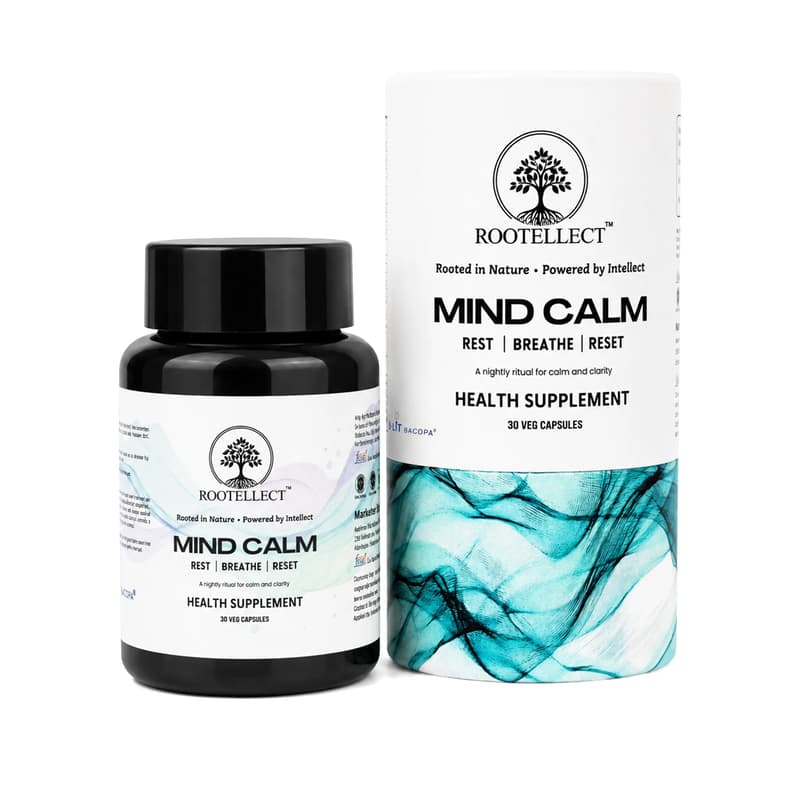
Rootellect Mind Calm
Price: Rs.1,049
Support a calmer, clearer mind with clean-label, non-melatonin daily wellness.
Shop Mind Calm →A Gentle Reminder Before You Go
If you saw yourself somewhere in this blog, the woman who is always doing, always capable, always fine on the outside, please hold onto this. Needing support does not make you any less strong. Recognising what your mind and body have quietly been carrying, often for years, is in itself a genuine act of strength, not a sign of weakness.
You do not have to wait until you feel completely overwhelmed before you start caring for your nervous system. Small, consistent steps — better sleep, gentle movement, honest boundaries and thoughtful nutritional support — can genuinely make a meaningful difference over time, even if the change feels slow at first.
You are allowed to slow down. You are allowed to rest without earning it first. And you are allowed to ask for support, even while you are still holding everything together so beautifully for everyone else.
Wondering if chronic stress hormones are also showing up in your body?
10 high cortisol symptoms in women →“Disclaimer: This blog is intended for informational and educational purposes only. Rootellect products are not intended to diagnose, treat, cure or prevent any disease. Results may vary from person to person. Please consult a qualified healthcare professional before starting any new supplement, especially if you have an existing medical condition or are currently on medication.”
Frequently Asked Questions
Is high functioning anxiety a real, recognised condition?
High functioning anxiety is not a formal clinical diagnosis, but it is a widely recognised and researched pattern in which a person experiences genuine anxiety symptoms internally while continuing to function at a high level externally.
How is it different from regular anxiety?
The core symptoms, like racing thoughts, restlessness and constant worry, are largely the same. The key difference is that high functioning anxiety is often masked by achievement, organisation and outward calm, which makes it far harder for others, and sometimes for the person herself, to identify.
Can hormonal changes really affect anxiety levels in women?
Yes, quite significantly. Hormonal shifts across the menstrual cycle, conditions like PCOS or PCOD, and the transition through perimenopause can all influence neurotransmitters linked directly to mood and calmness, often intensifying feelings of anxiety at different life stages.
When is it time to see a doctor about anxiety?
If anxiety is consistently affecting your sleep, relationships, work performance or overall quality of life, it is genuinely worth consulting a qualified doctor or mental health professional for guidance suited to your specific situation.
Can supplements actually help with anxiety?
Certain clean-label, standardised botanical ingredients may help support a calmer stress response and healthier nervous system function as part of an overall healthy lifestyle. That said, supplements are meant to complement, not replace, medical or psychological care where it is needed.
What are the most common signs of high functioning anxiety in women?
Common quiet signs include overthinking small decisions, replaying conversations, difficulty being fully present, a racing mind at bedtime, perfectionism, people pleasing, guilt while resting, jaw or shoulder tension, irritability, and fatigue that does not fully lift after sleep.
References & Further Reading
Reference Links
Looking for more calm, sleep and stress education?
Read the Mind Calm herbal science guide →Frequently Asked Questions
Is high functioning anxiety a real, recognised condition?
High functioning anxiety is not a formal clinical diagnosis, but it is a widely recognised and researched pattern in which a person experiences genuine anxiety symptoms internally while continuing to function at a high level externally.
How is high functioning anxiety different from regular anxiety?
The core symptoms, like racing thoughts, restlessness and constant worry, are largely the same. The key difference is that high functioning anxiety is often masked by achievement, organisation and outward calm, which makes it far harder for others, and sometimes for the person herself, to identify.
Can hormonal changes really affect anxiety levels in women?
Yes, quite significantly. Hormonal shifts across the menstrual cycle, conditions like PCOS or PCOD, and the transition through perimenopause can all influence neurotransmitters linked directly to mood and calmness, often intensifying feelings of anxiety at different life stages.
When is it time to see a doctor about anxiety?
If anxiety is consistently affecting your sleep, relationships, work performance or overall quality of life, it is genuinely worth consulting a qualified doctor or mental health professional for guidance suited to your specific situation.
Can supplements actually help with anxiety?
Certain clean label, standardised botanical ingredients may help support a calmer stress response and healthier nervous system function as part of an overall healthy lifestyle. That said, supplements are meant to complement, not replace, medical or psychological care where it is needed.
What are the most common signs of high functioning anxiety in women?
Common quiet signs include overthinking small decisions, replaying conversations, difficulty being fully present, a racing mind at bedtime, perfectionism, people pleasing, guilt while resting, jaw or shoulder tension, irritability, and fatigue that does not fully lift after sleep.